Showing all 4 results
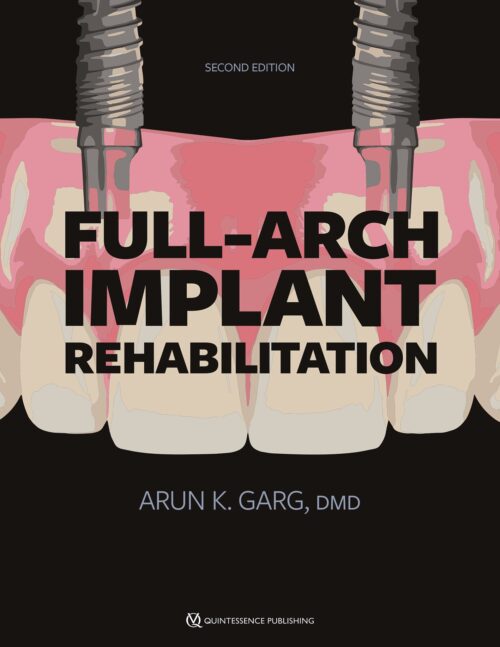
Full-arch Implant Rehabilitation
€ 105,00Arun K. Garg
In this fully revised and updated edition of his bestselling book, Dr Arun Garg delineates how full-arch implant rehabilitation (FAIR) can transform the lives of patients with complete edentulism or hopeless teeth. With the FAIR protocol, axial implants in the anterior are combined with tilted implants in the posterior to support a full-arch prosthesis; this FAIR prosthesis is immediate, fixed, esthetic, and highly functional, and it can frequently be loaded without bone grafting. The book describes the rationale behind the FAIR protocol, details the technique step by step along with its modifications, and demonstrates its use in various patient scenarios with comprehensive clinical case presentations. This new edition boasts several new chapters on digital dentistry and how to incorporate these tools in the workflow, including the role of CBCT, photogrammetry, and facial scanning, as well as additional chapters focusing on patient-perceived barriers to treatment, prosthetic protocols, and marketing your full-arch practice.
Optimizing Clinical and Laboratory Workflows
€ 148,00Vincent Fehmer
QDT is known to feature the best of the best in dental technology and esthetic dentistry, always pushing the boundaries of innovation and underscoring the value of clinical mastery. This year’s volume includes a record 20 articles, 5 of which are published online only to make the learning experience more dynamic and increase accessibility. While the articles span a variety of topics—from macrophotography to single-tooth rehabilitation to full-mouth reconstruction and so much more—the intersection of analog and digital approaches lies at the heart of the issue. Exceptional clinical and laboratory workflows leverage the advantages of both analog artistry and digital precision, and the articles in QDT 2026 showcase the fantastic outcomes that are possible when analog and digital are intertwined.
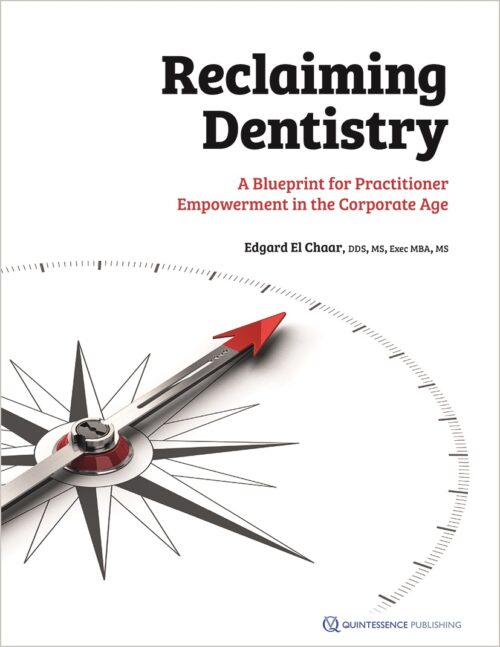
Reclaiming Dentistry
€ 42,00
Edgard El Chaar
The profession of dentistry is broken. The shift to “comprehensive care” in dental schools has diluted specialization, and the corporate model threatens independent practices with the rise of dental service organizations. These trends have created a complex and challenging environment for dentistry that directly impacts patient care, and clinicians must do better. In this book, Dr El Chaar introduces his collaborative dental entrepreneurship (CDE) model—a network of dental practices working together under a shared vision of ethical care, mentorship, and sustainable growth. In this model, a single experienced dentist acquires multiple practices, often from retiring practitioners, and integrates them into a cohesive system. The practices maintain their individual identities but benefit from shared resources, an internal referral network, and centralized management, and high-quality patient care and long-term patient relationships are prioritized. Learn how CDE operates, why it is effective, and how you can establish your own CDE practice or join an existing one. Do it for your patients. Do it for your legacy.
Single-Implant Complications
€ 132,00Charles J. Goodacre / W. Patrick Naylor
Single-implant treatment has become a common method of replacing missing and nonrestorable individual anterior and posterior teeth. While this treatment modality grows in popularity worldwide, complications can arise when implant biomechanical principles are not considered in treatment planning and clinical execution. This book details the seven complications common to single-implant therapy—infraposition/infraocclusion, interproximal contact loss, abutment screw loosening and fracture, fracture of single implants, ceramic chipping and fracture, loss of crown retention, and remake of the implant-supported crown—and describes the 25 biomechanical principles that must be observed to prevent these complications from developing after single-implant treatment. Furthermore, it links each complication with the specific biomechanical principles that were violated and how that violation resulted in said complication, as well as how to manage that complication and prevent it from recurring in the future. By the end of this book, readers should know how to address these three questions: What went wrong? Why did things go wrong? And how could the complication have been prevented?